
San Fernando Public Records Coverage
Access depends on both the record and its keeper. San Fernando City Clerk files concern city business, while most identity-bearing records belong to Los Angeles County, Los Angeles Superior Court, or a California agency. An online search may expose only an index, which is a list used to locate a file, rather than the full document. The coverage table leads with the working access route so a missing web result is not mistaken for a missing record.
| San Fernando record | Official keeper | Web coverage | Practical access |
|---|---|---|---|
| City decisions and permits | San Fernando City Clerk and Community Development | Records Counter; permit account | Search, email, phone, or CPRA request |
| Deeds and liens | LA RR/CC Recorder | No county internet index | Norwalk appointment; copies online, in person, by mail, or fax |
| Property and parcels | LA County Assessor | Current AIN/address portal and map | Free portal; data request fallback |
| Court cases and wills | Los Angeles Superior Court | Paid name indexes from the 1980s or 1990s by case type | Online index, courthouse terminal, or archives |
| Birth, death, and marriage | LA RR/CC or CDPH | No broad public certificate index | Authorized or informational copy request |
| Business and licenses | California SOS, DCA, CSLB, State Bar | Current searches; history varies | Free search; certified orders may cost |
Voter data has its own regulated process, including a self-lookup and approved-purpose file requests. The complete rules and fields are collected under San Fernando voter records. Sealed and juvenile cases, adoption records, protected addresses, confidential voter data, medical files, and some law-enforcement material are not open merely because another record in the same office is public.
San Fernando City Records Counter
The City Clerk is custodian for council minutes, ordinances, resolutions, election administration files, municipal code history, FPPC filings, and Form 700 statements. The city sends searchers first to its Online Records Counter. Search terms can include a date, ordinance, resolution, or address. If a document does not appear, email cityclerk@SanFernando.gov or call (818) 898-1204. A specific request is easier to locate than a broad demand.
Permits use a separate Online Permit Counter. It lists permit and plan-check status, inspection results, and project financial data, but detailed access depends on a free account whose email is tied to the permit or case. Community Development or the City Clerk can receive a request for public permit material that the account view does not show. Code enforcement has no public case index in the research; reports go by phone, may be anonymous, and are handled confidentially.
Note: City duplication costs follow its fee resolution and may have to be paid before copies are produced.
San Fernando Deed Records Stay Offline
Los Angeles County real estate records are public, yet the RR/CC does not publish its grantor-grantee index on the internet. The office cites the former Government Code section 6254.21 concern about online home addresses of elected or appointed officials. The county cannot readily identify every protected person and address in the recorded documents. This local quirk changes the access method, not the public status of deeds.
The county's early land trail reaches 1850 or 1851. At Norwalk Headquarters, records from 1851 through 1957 are reviewed on the lower level, while records from 1958 onward are on the second floor. Index staff do not accept telephone searches. A searcher needs a grantor or grantee name and an approximate recording year; grantor means the person transferring an interest, and grantee means the person receiving it.
| Recorder search key | How it works | Use or limit |
|---|---|---|
| Grantor name | Alphabetical name and year index | Use for the person giving title |
| Grantee name | Alphabetical name and year index | Use for the person receiving title |
| Recording year | Narrows the office index | An approximate date is strongly needed |
| Document number | Identifies a copy order | Speeds a request when known |
| Street address | Not supported by recorder index | Start with the assessor instead |
The RR/CC public-access notice and copy channels show why a web-only search is incomplete.
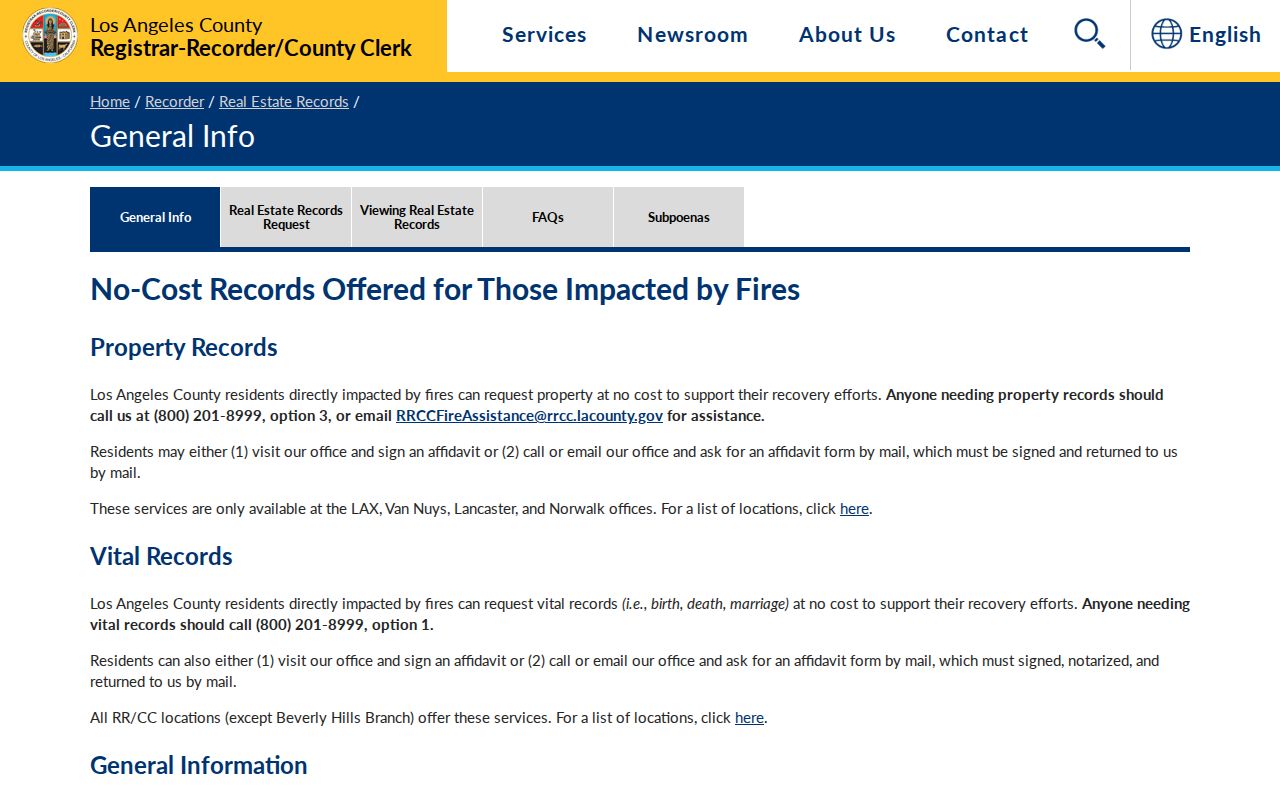
The captured county page confirms the missing internet index and directs users toward the official viewing and copy routes. Copies can be ordered online through the county's vendor, in person, by mail, or by fax; online real estate copy orders may take 20 working days.
San Fernando Property Records Geography
“San Fernando” may mean the incorporated city or the much wider San Fernando Valley. The wrong meaning can send a request to the City of San Fernando when the parcel is actually in Los Angeles, Mission Hills, Sylmar, Pacoima, or another nearby community. Use the LA County Assessor Portal by address or Assessor's Identification Number, called an AIN. The map search adds parcel, city, community, ZIP, and supervisorial district layers.
An address-based deed search therefore follows a local handoff: address to assessor AIN and parcel, parcel to the correct city boundary, then an owner or party name to the RR/CC index at Norwalk. The assessor is the web starting point; the recorder supplies the actual title chain. Do not treat a situs address, which is where land sits, as the same thing as a mailing address or legal description.
Note: Exact public owner-name and mailing-address fields were not confirmed in the accessible Assessor Portal text.
San Fernando Court Records Access
San Fernando cases belong to Los Angeles Superior Court, not a separate municipal court. The Civil Party Name Search covers civil, family, probate, and small claims matters. Unlimited civil, probate, and family coverage begins in 1983; limited civil begins in 1991; small claims begins in 1992. The Criminal Defendant Name Search covers felonies from 1980 and misdemeanors from 1988, with some older municipal court data back to 1983. Each name search costs $4.75 even when no match appears.
Results can show a party or defendant name, case number, case type, filing date, filing location, and available image count. Remote access is narrower than access at a courthouse computer, especially for criminal, family, custody, and civil harassment matters. Sealed and juvenile records remain closed. Older cases go to court archives, and wills belong with probate court files rather than the county recorder.
Online images cost $1 per page for the first five pages and $0.40 per later page, capped at $40 for one document. A docket is the case's event list, not proof that each claim in a filing is true.
San Fernando Vital Records Copies
The city does not issue birth, death, or marriage certificates. Los Angeles County RR/CC handles events in the county, while CDPH Vital Records is the statewide route. CDPH says its certified-copy processing averages five to seven weeks and that a county office may be faster for a county event. Divorce decrees come from the court; CDPH can issue a certificate of record for a dissolution where available.
California Health and Safety Code sections 103525 and 103526 divide authorized certified copies from informational certified copies. Authorized copies require an eligible relationship and, for many mailed requests, a notarized sworn statement. An informational copy is marked as not valid to establish identity. Current CDPH fees are $31 for birth, $26 for death, $19 for marriage, and $18 for dissolution. CDPH keeps the fee as a search charge if it cannot locate the record.
Copy eligibility. A public index entry does not make every certified copy open. Choose the right form and authorized or informational copy type.
San Fernando Business Records Lookups
Business and license databases connect a public name with an entity, status, filing, agent, or professional credential. California SOS Bizfile searches corporations, limited liability companies, and limited partnerships by entity name or number. A result may show registration date, status, jurisdiction, entity type, agent, address, and filing history. LA County's fictitious business name route covers local trade names, with county copies noted from April 2011 forward.
The California Bizfile public search provides the entity entry point.
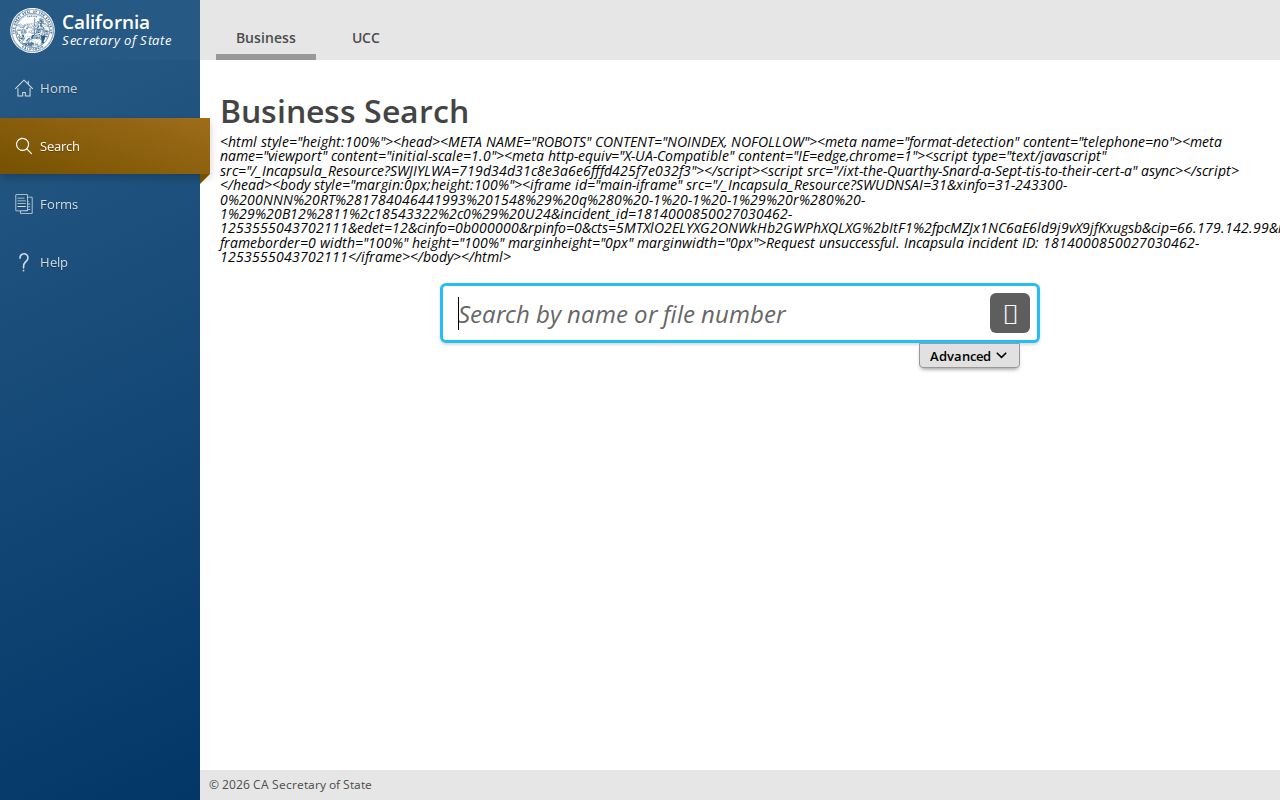
The search screen supports the name-or-number method and separates a free entity lookup from paid certified orders. For licensed occupations, DCA License Search can report a licensee name, number, status, city, and discipline where that board publishes it.
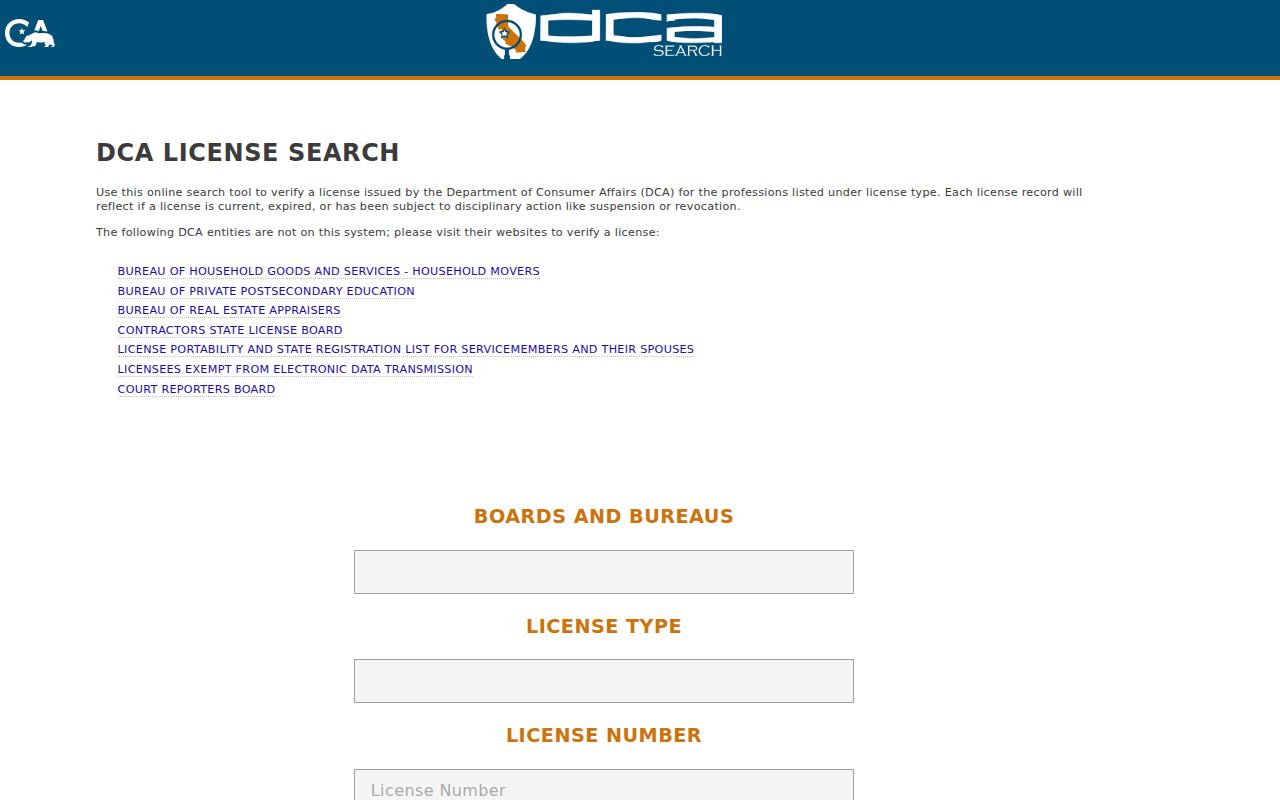
The DCA portal adds a credential check to the entity record. Contractors also have a CSLB search by license number, business name, or personal name, while attorneys are searched by name or bar number through the State Bar.
San Fernando Custody Records Channels
Local police reports and policy records start with the San Fernando Police Department or city request process. The police proactively posts SB 978 policy, PREA, and jail manual records. Current Los Angeles County jail custody is a separate LASD function; the Inmate Information Center has an official locator and phone help at (213) 473-6100. Recent bookings can lag. State prison custody is searched through CDCR CIRIS, whose results may include a CDCR number, age, current location, commitment counties, admission date, and parole hearing dates or outcomes.
The California Megan's Law registry search and warning is a distinct public-safety channel.
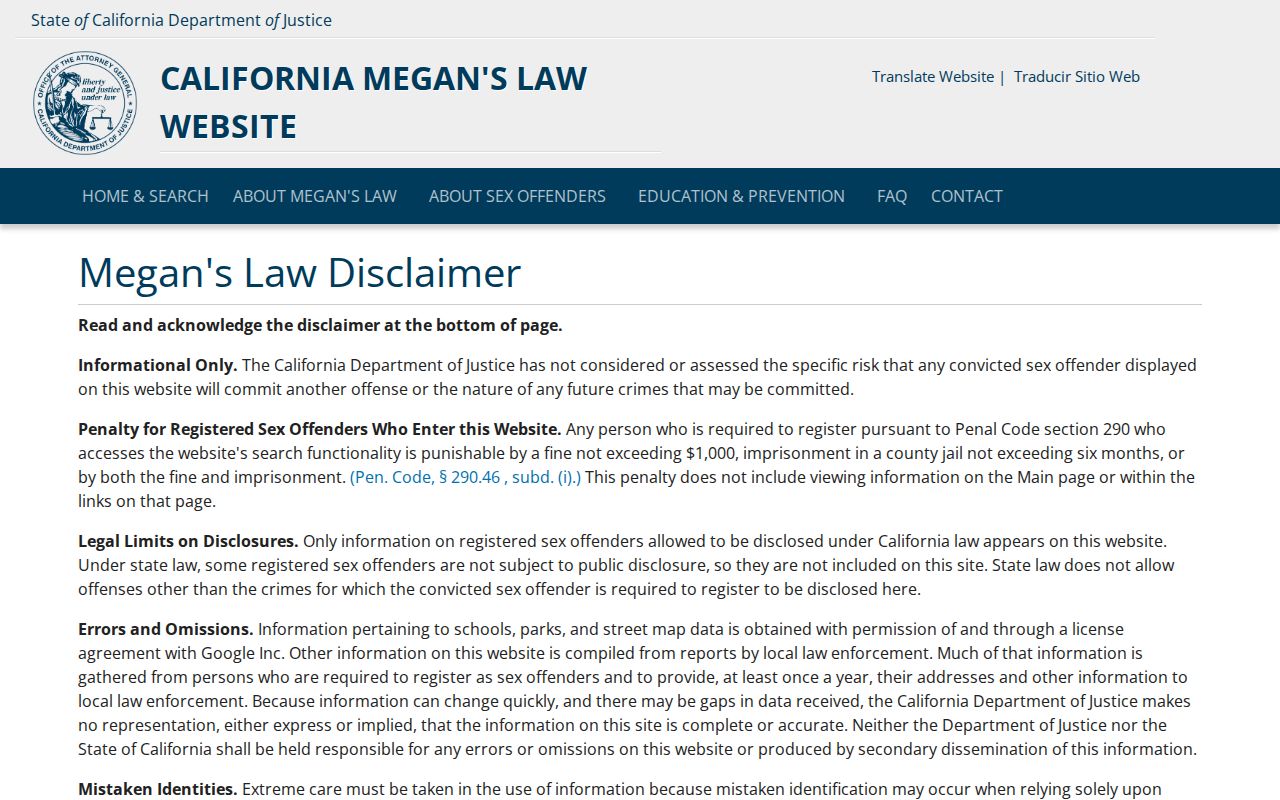
The captured entry page places legal-use limits beside the search. Penal Code section 290.46 governs the registry, and its data must not be used to harass a registrant. County custody, state custody, police reports, and the registry answer different questions and should not be treated as one database.
California Public Records Limits
The California Public Records Act begins at Government Code section 7920.000, but it does not erase other confidentiality laws. Juvenile, adoption, sealed, and expunged records remain restricted. Remote court access may omit sensitive electronic documents available only at a courthouse terminal. DMV files are protected by the federal Driver's Privacy Protection Act. Protected voter files exclude confidential registrants, driver's license data, the last four digits of a Social Security number, unique identifiers, and signatures.
Safe at Home supplies a substitute address for qualified participants. Recent vital records also have certified-copy eligibility rules. Certain police investigatory material, medical files, military discharge documents, and records covered by a court order may be withheld or redacted. A custodian should identify the legal basis when it denies access, and a requester can narrow the request to segregable, nonexempt parts.
Commercial broker deletion is different from agency records. California's DROP mechanism opened to residents in 2026, with registered data brokers due to start processing requests on August 1, 2026. It does not remove a deed or court file that the law requires an agency to keep.
San Fernando Records Custodians
Three offices form the main San Fernando records handoff. The City Clerk holds municipal material at City Hall. The combined Registrar-Recorder/County Clerk handles recorded land documents, county vital records, marriages, fictitious business names, and voter services. Los Angeles Superior Court keeps cases, dockets, wills, and probate files. Use the office card that matches the record, not simply the office closest to San Fernando.
LA Registrar-Recorder/County Clerk
Norwalk Headquarters; appointment for deed index review
No telephone index searches
Los Angeles Superior Court
San Fernando Courthouse and countywide court services
Archives for older case files
For an office-only record, keep the index reference, document number, date, and copy receipt. Those details make later certified-copy requests far easier to repeat.
San Fernando Records Terms
Access pages use several terms that sound alike but lead to different results. Knowing the distinction prevents a paid search or copy order from producing less than expected.
- Index
- A list of names and filing facts used to locate a record. It is not the full document image.
- Certified copy
- An official copy authenticated by the custodian for uses that require certification.
- Custodian
- The agency or office responsible for keeping and responding for a record.
- Exemption
- A legal rule that allows or requires an agency to withhold all or part of a record.
- AIN
- The Assessor's Identification Number used to identify a Los Angeles County parcel.
For a San Fernando request, note whether an online result is only an index and whether the receiving office can certify the final copy. That small check prevents a second order.
Request San Fernando Public Records
Any person may request an open agency record under the California Public Records Act. The agency generally has 10 calendar days to determine whether responsive records are disclosable. Unusual circumstances may extend that determination. Production follows within a reasonable time, and fees generally cover duplication or a record-specific statutory charge rather than broad search or redaction work.
- Name the correct custodian and the record type. A city permit request, county deed copy, and court case file go to different offices.
- Check the official index or counter first. Capture the party, date, case, permit, parcel, or document number that identifies the file.
- Submit through the office's portal, email, mail, fax, phone, or in-person channel. State a date range and preferred electronic or paper format.
- Review the cost notice and decide whether an ordinary or certified copy is needed. Pay a required duplication or certification fee.
- If access is denied, ask for the cited exemption and all segregable portions. Narrow the wording, seek agency review, or use the CPRA's court remedy when warranted.
Lawful use. San Fernando open records support civic review, family history, estate research, and fraud checks. Never use a record to stalk, harass, intimidate, or expose a protected address.
When an agency withholds part of a file, it should still disclose reasonably separable public material. A focused request often resolves the issue faster than a demand for every file that mentions a broad subject.